Having spent all of yesterday afternoon taking our Isabella full awning down & packing all the loose items away, this morning we had an early breakfast & then unhooked the caravan, pushed it the 50m (with the aid of some neighbours), to our new pitch & set it up again. But this time with our lighter part awning. Janet is now a happy bunny & having had lunch is now sunbathing…
Our Winter Sun Trip to Southern Spain, then Portugal, returning to the UK via Santander for Easter.
Monday, 21 March 2011
Praia da Luz
Wednesday 16th March
Left La Aldea in sunshine & had a pleasant 3.5 hour drive, including a lunch stop, to Turis Campo, just outside Praia da Luz, on the western side of Lagos . We decided to book a fully serviced pitch (water in & out) & as usual had to find a free space which meets Janets simple requirements – being the right balance of sun, shade, view, quiet, George friendly etc. etc. Still haven’t convinced her that El Dorado doesn’t exist!!
However the site is probably the best we have stayed on so far and the showers below the swimming pool are first class.
Thursday 17th March
A beautiful day, with breakfast outside. Then spent most of the day cleaning the van & putting the awning up, having decided to try it without the front panels as the next week is going to be hot, hot, hot, – sorry got carried away!!
I was getting a bit worried though as we were down to our last bottle of vino tinto. (Running low on toilet rolls is my next worst nightmare!)
Friday 18th March
Went into Praia da Luz, then off to the supermarket in Lagos to top up with the essentials, being wine, beer, water, toilet rolls, plus the other necessary items to live!
Saturday 19th March
Janet did some more washing & I ironed some bits that had been washed yesterday. Then, just my luck, some pitches close to us have become vacant & Janet has decided that she likes one of them better than ours, so she has arranged for us to move onto it!! Just means that I have to take the awning down, pack everything up, hitch up the caravan, move the 100m & then level it again, connect up the water & waste, re-erect the awning. At the same time I have to make sure the sun/shade is exactly the right place at the time Janet wants it to be. Hey Ho!!
Just like to confirm that whilst we do have a full cooker in our van we prefer to cook outside whenever we can using our Camping Gas cooker or our griddle. Obviously the outdoor man in me coming out ~ along as it is warm enough for shorts of course!!
On this point… whenever we have been at UK caravan sites, usually in inclement weather, it seems that almost all have their obligatory BBQ’s outside with the men cooking with full foul weather coats & umbrellas etc.
By comparison, whilst we have BBQ’d when we can; we have seen very few people cooking outside on any of the sites we have been on so far. A bit of an enigma to say the least!
Whilst I am writing this Janet has moved over to some neighbours van to watch the six nation’s rugby whilst I have taken George for a walk & tidied up, fed him etc. Janet has just got back & not impressed with the England result.
Sunday, 20 March 2011
New Friends
Going off on a new tangent on our blog...
Part of the enjoyment of this trip is meeting & getting to know people.
At La Manga we met Shirley & Ron whom we enjoyed several drinks & dancing down the club house with. At Castillo de Banos, Maureen & Colin, on the day of our arrival Maureen very kindly offered to look after George during our day trip to Alhambra (sorry to just miss you at Turis Campo). At Cabopino & amongst others, Anne & Guido who after coming over to our van for a drink, invited us for a very enjoyable, (Italian) lunch in their motor home. We have to say that having lunch with them was on par with eating at a good restaurant as Anne, quite rightly, likes to present a very well laid table with first class crockery & cutlery. Very nice & again thank you Anne & Guido.
Anne also took the pictures of us getting ready to leave Cabopino. We will keep in touch and hopefully meet up again with all our new friends.
Sunday, 13 March 2011
El Rocio, Huelva
El Rocio, a strange outpost of the Wild West, with wide, sandy streets lined with houses complete with broad verandas and wooden rails for tying up horses. It's famous for its annual romería, the Rocío Pilgrimagee at Pentecost when it is overflowing with a seething mass of a million pilgrims with horses and decorated carts.
The sand streets and hitching posts together with people riding round on horses give it a feel of a Spaghetti Western. There are hitching posts outside all the shops and restaurants! This did cause us a small problem as George has decided that he doesn’t like horses. In fact he doesn’t like anything bigger than him – apart from humans!
Apparently the rest of the year it is a veritable ghost town, its streets almost eerily deserted except for mainly weekend visitors. This is because most of its larger buildings are dedicated to the various hermandades (brotherhoods), which number nearly 100, of Andalucía and are only used around the time of the romería.
Most of the other houses are also only occupied by families who come for the pilgrimage. It's interesting reading the tiled plaques on these houses, which are dedicated to the member of the family who built them. Some say it's worth a visit purely to soak up this rather peculiar and unique atmosphere. Unfortunately it has been raining heavily on & off since we arrived & there are pools of water everywhere so we were not as impressed as we should probably have been.
The huge church, the Ermita or Sanctuario de Nuestra Señora de El Rocío, its size completely at odds with a village the size of El Rocío, dominates the main, rather wet, square. Destroyed in the 1755Lisbon earthquake, it was rebuilt in the 60s. Inside is the wooden figure of the revered Virgen del Rocío.
Around the church are lots of souvenir shops selling pilgrimage-related paraphernalia. This is also the place to buy the latest fashions for the pilgrimage. These change yearly and the only way to ensure that your flamenco attire is at the cutting edge of the Rocío trend is to buy it here and not elsewhere in Andalucía. Couldn’t convince Janet about this.
El Rocío sits right on the north-western edge of the Parque Nacional de Doñana, it's in an area rich in wildlife. However we found it very uninteresting compared with equivalent places in theUK . The village itself is located on the Marismas del Rocío, a marshland area where there are many birds, particularly in spring, including flamingos, herons and storks.
Overall, & apart fromSeville , we are not over keen on this region so have decided to move onto Portugal a week earlier than planned. So this will probably be our last blog until the end of next week. Thank God I hear you all saying!!
The sand streets and hitching posts together with people riding round on horses give it a feel of a Spaghetti Western. There are hitching posts outside all the shops and restaurants! This did cause us a small problem as George has decided that he doesn’t like horses. In fact he doesn’t like anything bigger than him – apart from humans!
Apparently the rest of the year it is a veritable ghost town, its streets almost eerily deserted except for mainly weekend visitors. This is because most of its larger buildings are dedicated to the various hermandades (brotherhoods), which number nearly 100, of Andalucía and are only used around the time of the romería.
Most of the other houses are also only occupied by families who come for the pilgrimage. It's interesting reading the tiled plaques on these houses, which are dedicated to the member of the family who built them. Some say it's worth a visit purely to soak up this rather peculiar and unique atmosphere. Unfortunately it has been raining heavily on & off since we arrived & there are pools of water everywhere so we were not as impressed as we should probably have been.
The huge church, the Ermita or Sanctuario de Nuestra Señora de El Rocío, its size completely at odds with a village the size of El Rocío, dominates the main, rather wet, square. Destroyed in the 1755
Around the church are lots of souvenir shops selling pilgrimage-related paraphernalia. This is also the place to buy the latest fashions for the pilgrimage. These change yearly and the only way to ensure that your flamenco attire is at the cutting edge of the Rocío trend is to buy it here and not elsewhere in Andalucía. Couldn’t convince Janet about this.
El Rocío sits right on the north-western edge of the Parque Nacional de Doñana, it's in an area rich in wildlife. However we found it very uninteresting compared with equivalent places in the
Overall, & apart from
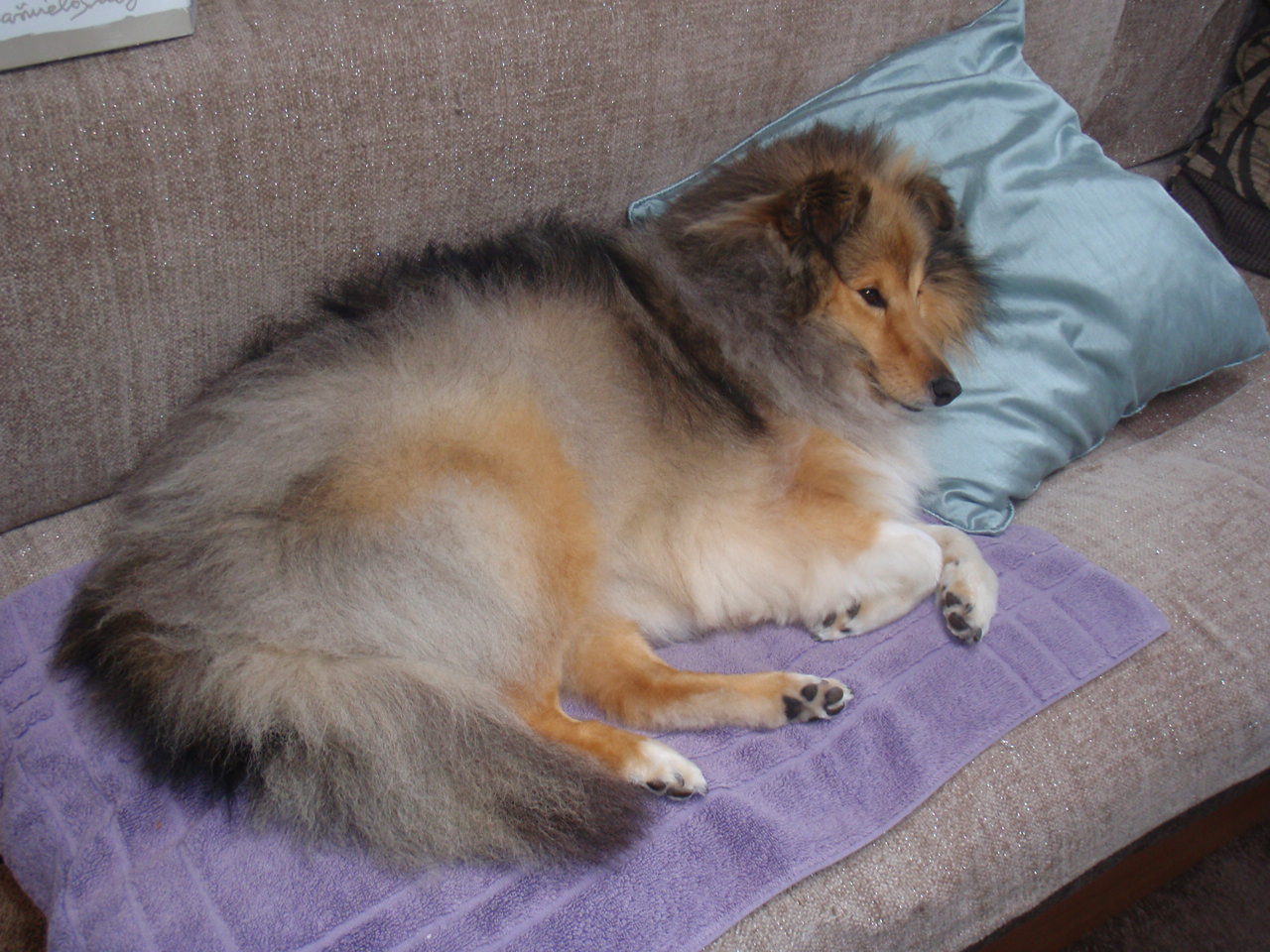
Finally and after this mornings walk, a bath, grooming & lunch, it is time for a dog's siesta!!
Saturday, 12 March 2011
Seville
The main reason for staying at the La Aldea campsite is that it is only a one hour drive from Seville , which we wanted to visit. We also decided that today (Saturday), may be a better day in order to avoid the weekday traffic queues we had experienced on the way here. The day didn’t start brilliantly as it was very foggy during the drive to get there, although it eventually got better.
We then had my own impromptu drive, or ‘personal tour’ as I prefer to call it, around the city (twice), into the old town, not very interesting, & certainly not a good idea in a 4X4!!
Obviously during this time TomTom Janet was trying to decide which way to hold the map up & whether to put her reading glasses on. In the meantime I was trying to dodge the manic Spanish driver’s who thought I was fair game & hadn't a clue where I was going, (they got that bit right)!
Eventually and after several discussions on the merits of a quickie divorce we found a parking space, had a quick coffee & a much needed relief stop & headed for what we hoped was the direction of the city.
Now, the next bit took me a long time to research so read on – well a few minutes on Google actually!!
In the 1920's, while they were redirecting the Gudalquivir river and building the new port and factories, the Sevillenos decided to put on an exposition. In a tremendous burst of energy, they turned the entire southern end of the city into an expanse of gardens and grand boulevards. (By luck this is where we parked & eventually started our day inSeville ).
The centre of it is Parque de Maria Luisa, a half mile of palms and orange trees, elms and Mediterranean pines, covered with flower beds and dotted with hidden bowers, ponds and pavilions. (Obviously not at its best in March). The park is designed in a mix of 1920's Art Deco and mock 'Mudejar', (the name given to individual Moors or Muslims of
Al-Andalus who remained in Christian territory after the Reconquistay – clever or what?) .
Scattered about and round the edge are more buildings from the 1929 fair, some of them surprisingly opulent, built in the last months before the Wall Street crash undercut the scheme's impetus.
Towards the end of the park, the grandest mansions from the fair have been adapted as museums. The farthest contains the city's archaeology collections. The main exhibits are Roman mosaics and artefacts from nearby Italica, along with a unique Phoenician statuette of Astarte-Tanit, the virgin goddess once worshipped throughout theMediterranean .
We then wondered intoSeville for more cultural touring before lunch & then crepes later. (before you say it, I know a picture of a tram is not cultral!)
We then had my own impromptu drive, or ‘personal tour’ as I prefer to call it, around the city (twice), into the old town, not very interesting, & certainly not a good idea in a 4X4!!
Obviously during this time TomTom Janet was trying to decide which way to hold the map up & whether to put her reading glasses on. In the meantime I was trying to dodge the manic Spanish driver’s who thought I was fair game & hadn't a clue where I was going, (they got that bit right)!
Eventually and after several discussions on the merits of a quickie divorce we found a parking space, had a quick coffee & a much needed relief stop & headed for what we hoped was the direction of the city.
Now, the next bit took me a long time to research so read on – well a few minutes on Google actually!!
In the 1920's, while they were redirecting the Gudalquivir river and building the new port and factories, the Sevillenos decided to put on an exposition. In a tremendous burst of energy, they turned the entire southern end of the city into an expanse of gardens and grand boulevards. (By luck this is where we parked & eventually started our day in
The centre of it is Parque de Maria Luisa, a half mile of palms and orange trees, elms and Mediterranean pines, covered with flower beds and dotted with hidden bowers, ponds and pavilions. (Obviously not at its best in March). The park is designed in a mix of 1920's Art Deco and mock 'Mudejar', (the name given to individual Moors or Muslims of
Al-Andalus who remained in Christian territory after the Reconquistay – clever or what?) .
Scattered about and round the edge are more buildings from the 1929 fair, some of them surprisingly opulent, built in the last months before the Wall Street crash undercut the scheme's impetus.
Towards the end of the park, the grandest mansions from the fair have been adapted as museums. The farthest contains the city's archaeology collections. The main exhibits are Roman mosaics and artefacts from nearby Italica, along with a unique Phoenician statuette of Astarte-Tanit, the virgin goddess once worshipped throughout the
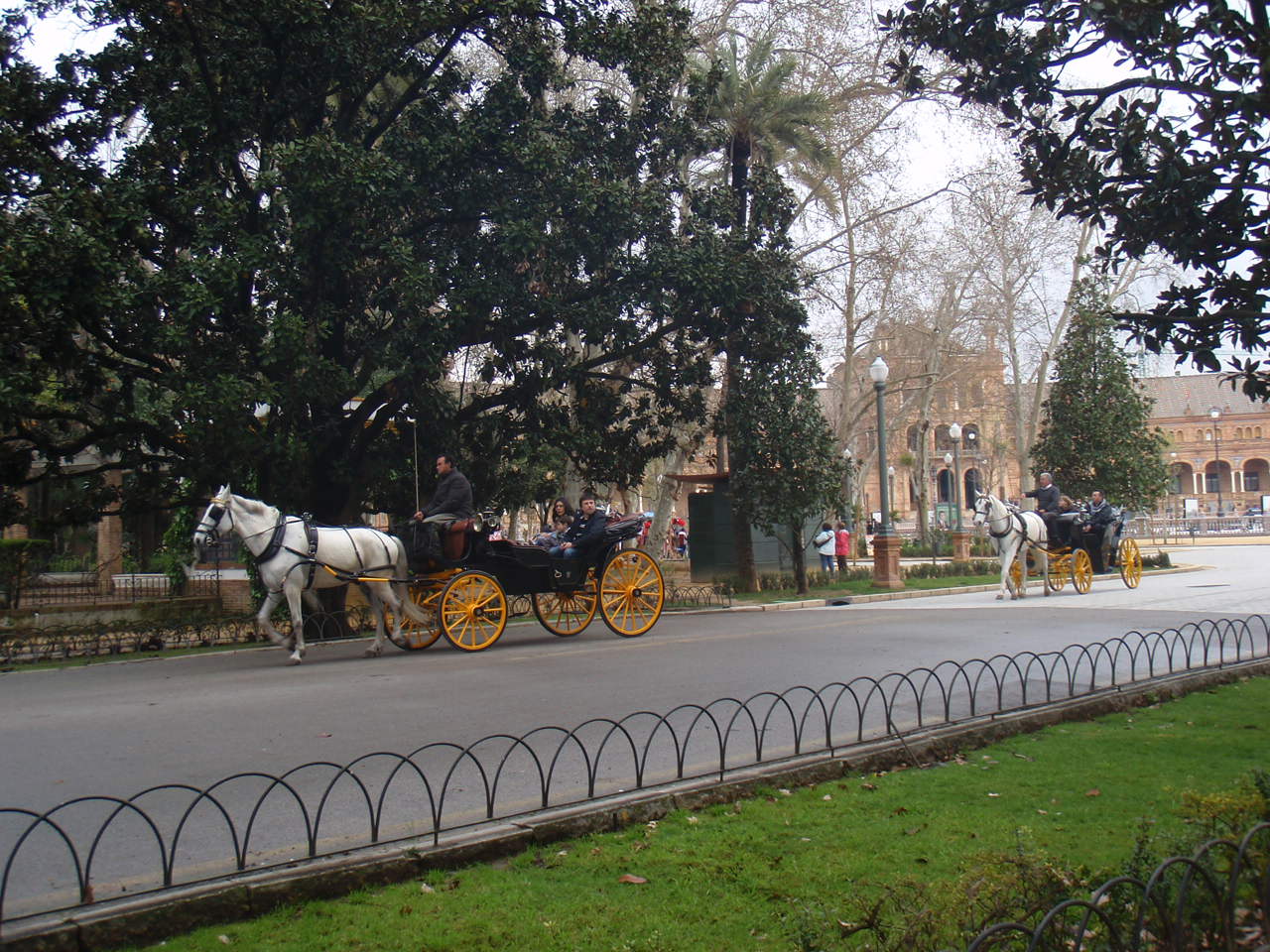
The Plaza de Espania fronts onto a semicircular canal and a plaza, with the Museo Militar being the main focal point. This is Seville 's military museum which explores Spain 's military history from the 15th century to present day.
I expect my Masters Degree in the post after this!!
We then wondered into
Subscribe to:
Posts (Atom)